One of the challenges business managers have faced as long as there has been technology to invest in is soliciting useful feedback from employees for better decision-making. Your people have a lot to lose if you make the wrong choice, so it’s natural for them to become emotional.
But making a technology decision based on the loudest voices in the room can be a big mistake. It happens more often than you think.
Usherpa co-founder Dan Harrington wrote about this in his book Authentic Intelligence: The Other AI.
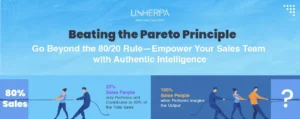
In Chapter 7, Harrington describes the “mouthy minority,” a small, vocal group that can dominate discussions about tech adoption. They often chase shiny new features, even if they don’t add real value.
Meanwhile, your top performers remain quietly productive, not getting involved in the debate.
The Squeaky Wheel Shouldn’t Always Get the Grease
This is a critical leadership challenge. If you let the most persistent complainers dictate your roadmap, you risk derailing adoption for the rest. Without adoption, as we have written about elsewhere on this blog, the entire investment could be lost.
Harrington’s advice? Consider the source of the feedback.
Are the requests coming from your most productive users, or your least experienced? Are the features being demanded going to help everyone, or just a few?
Before chasing a new function, test it with top performers. If they can adopt it quickly, see time savings, and improve productivity, then you’ve got something worth scaling.
If not, it’s likely just another distraction.
Making better decisions means gathering as much data as possible and then filtering it to find the feedback that will elevate the entire team’s performance.
Harrington urges business leaders to use their Authentic Intelligence, the other AI. That means using your judgment, your people instincts, and your experience to decide what matters most.
Looking for ideas about how to filter feedback and build stronger adoption strategies in your institution? See a demo of our SmartCRM and then talk to Usherpa today.